
Speculative Ecologies for a More-Than-Human Future
Symb-io-nts explored how design can reposition itself in a time of mass extinction by shifting from human-centered thinking toward symbiotic relationships with non-human life. Students examined how digital tools—3D scanning, computational design, and digital fabrication—can intervene in natural systems in speculative and future-oriented ways. Instead of using organisms as aesthetic references, the projects studied biological logics, growth patterns, and ecological pressures to create artifacts that could coexist with or support other species.
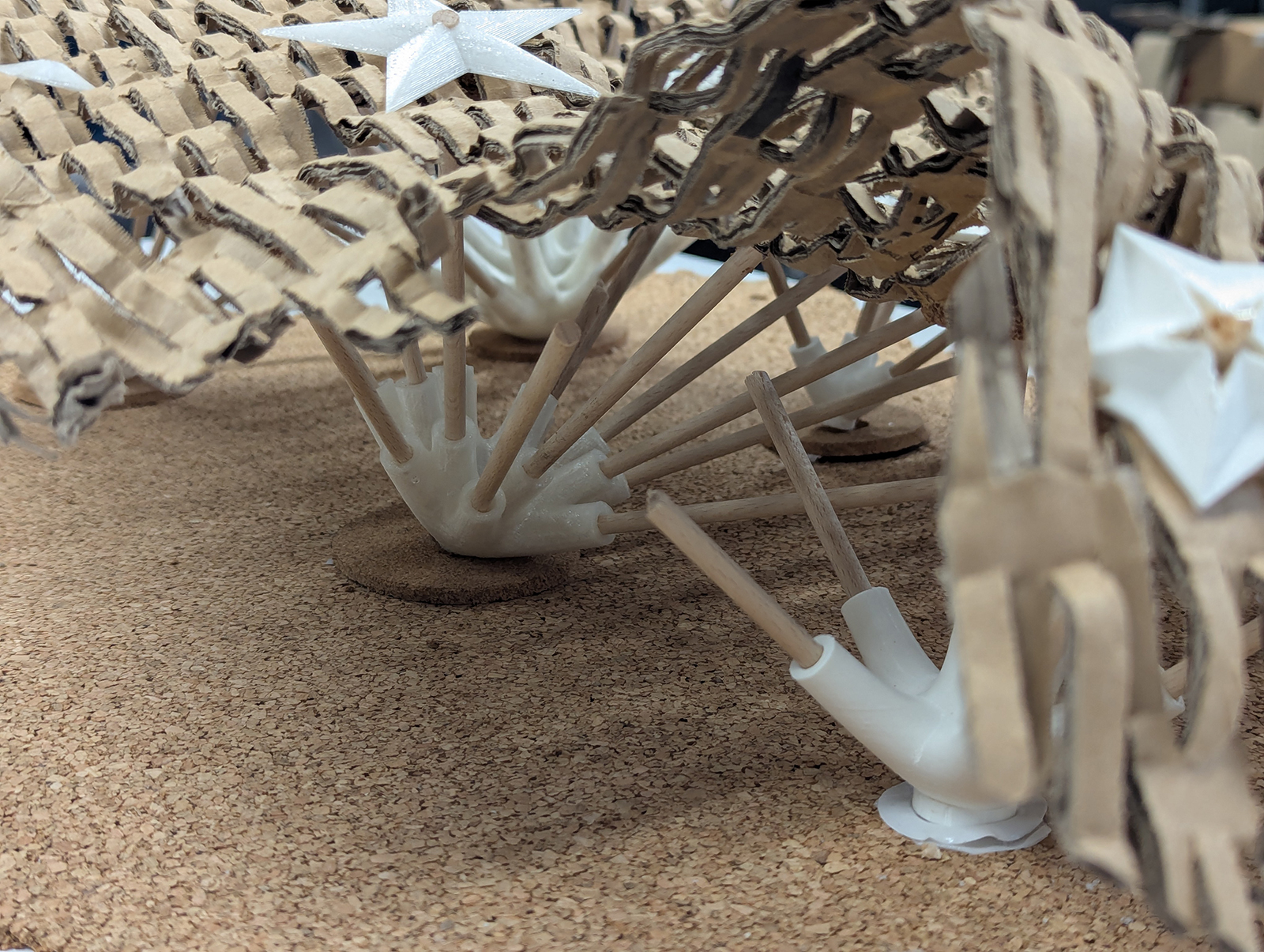
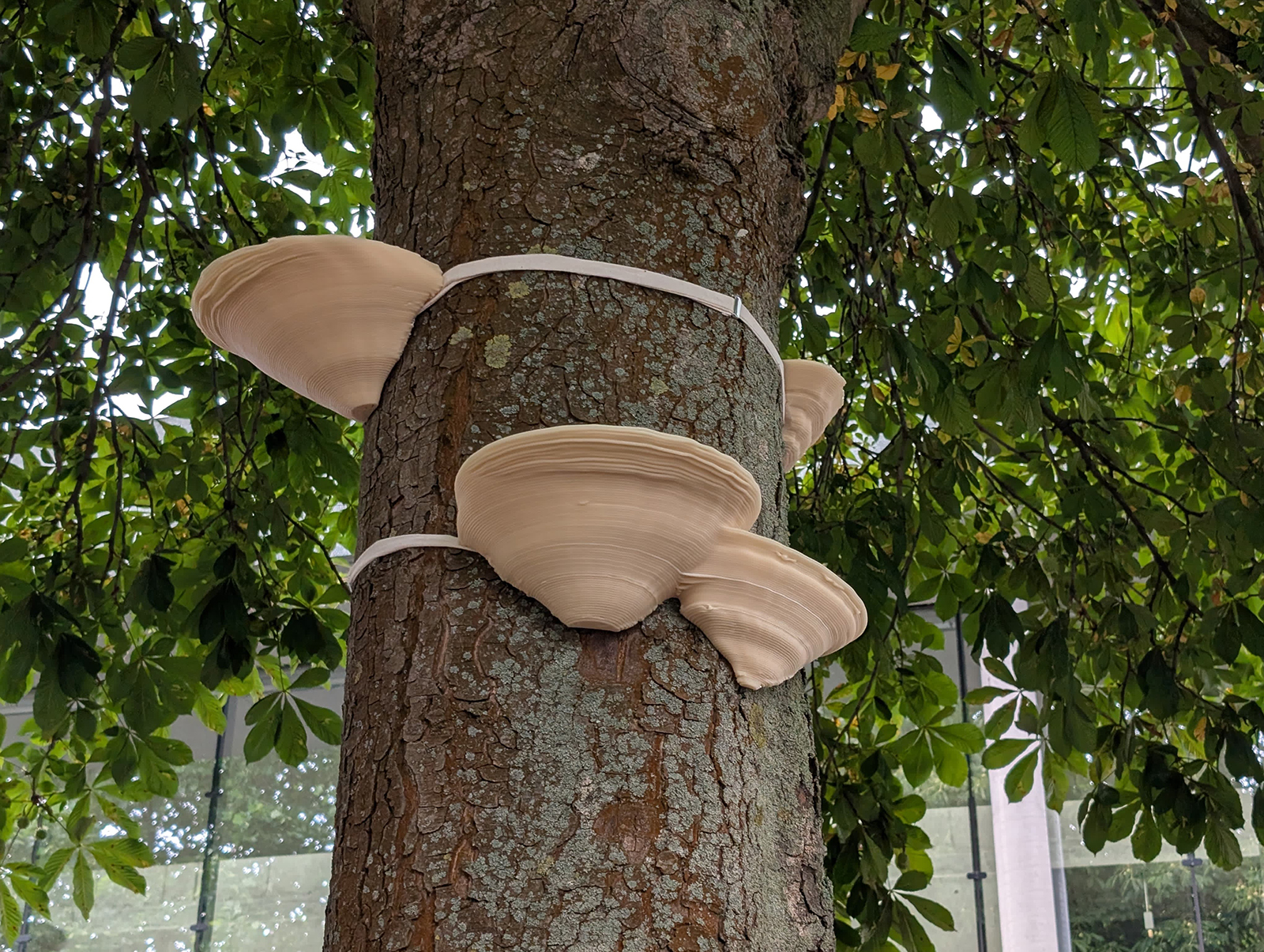
Field scanning and the analysis of natural structures informed design proposals that challenged anthropocentric assumptions and engaged themes of care, interdependence, and ecological responsibility. Outcomes ranged from micro-scale attachments for insects to larger interventions for threatened habitats, all questioning what it means to design “with” rather than “for” nature.
Through iterative prototyping and material exploration, Symb-io-nts demonstrated how contemporary technology can help envision alternative ecological futures and contribute to the evolving discourse on design against extinction.
The Bat Cave is a roosting system that offers bats safe space to shelter and breed, supporting their vital roles in pollination and insect regulation. By integrating habitat into human environments, the project contributes to biodiversity restoration. It reframes design as co-existence, using computational modelling and digital fabrication to create forms shaped by biological needs and grounded in ecological responsibility.

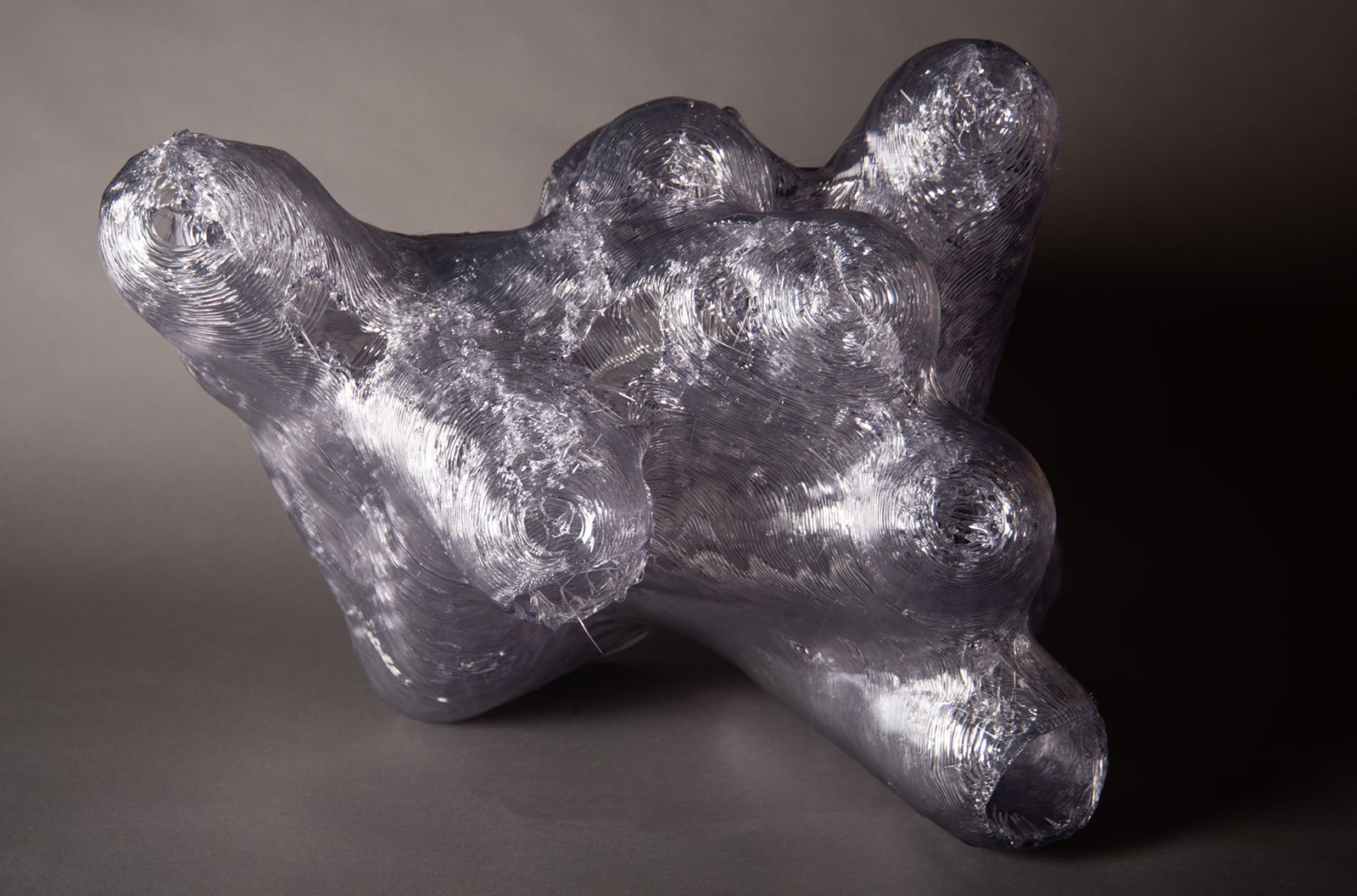


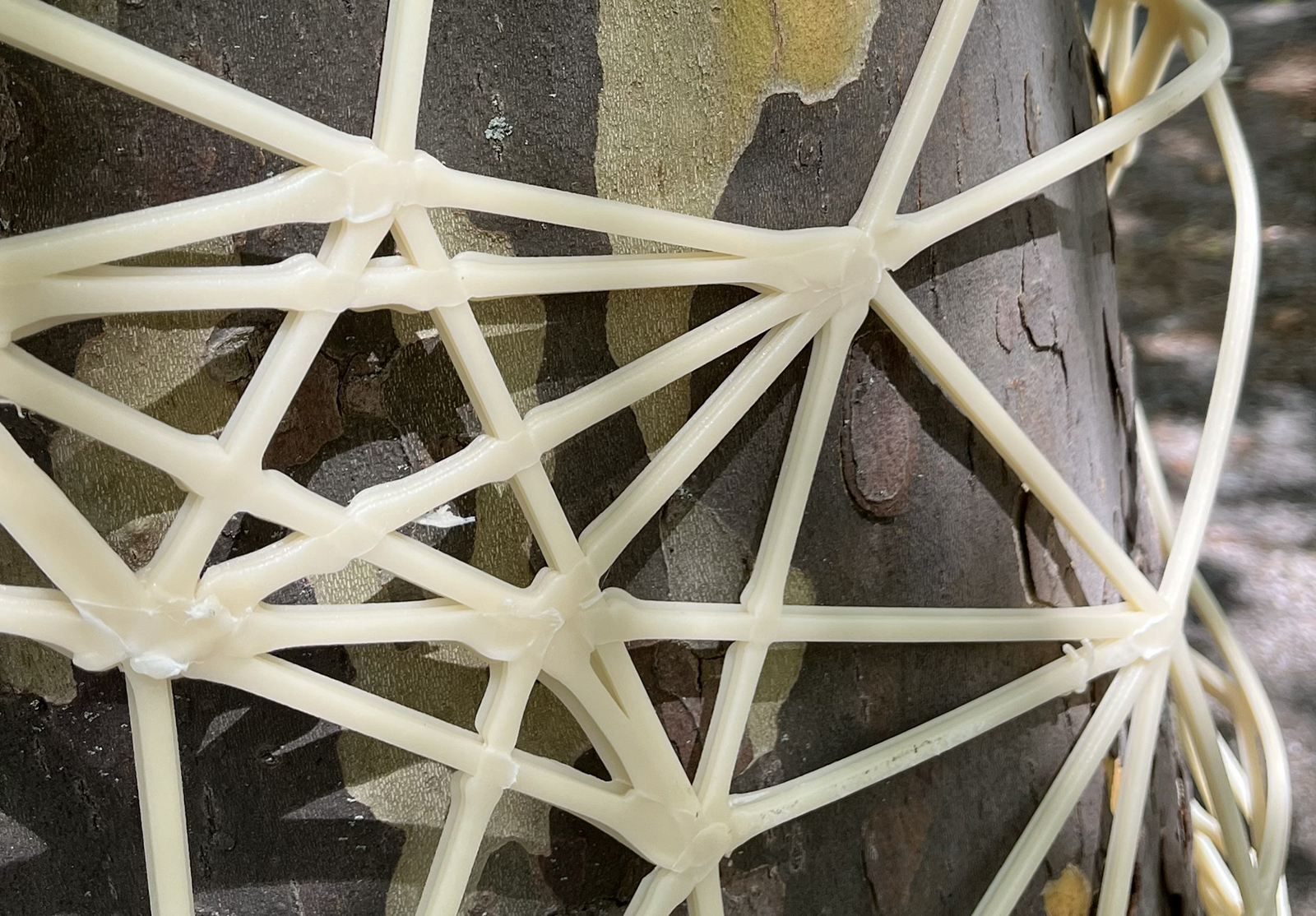
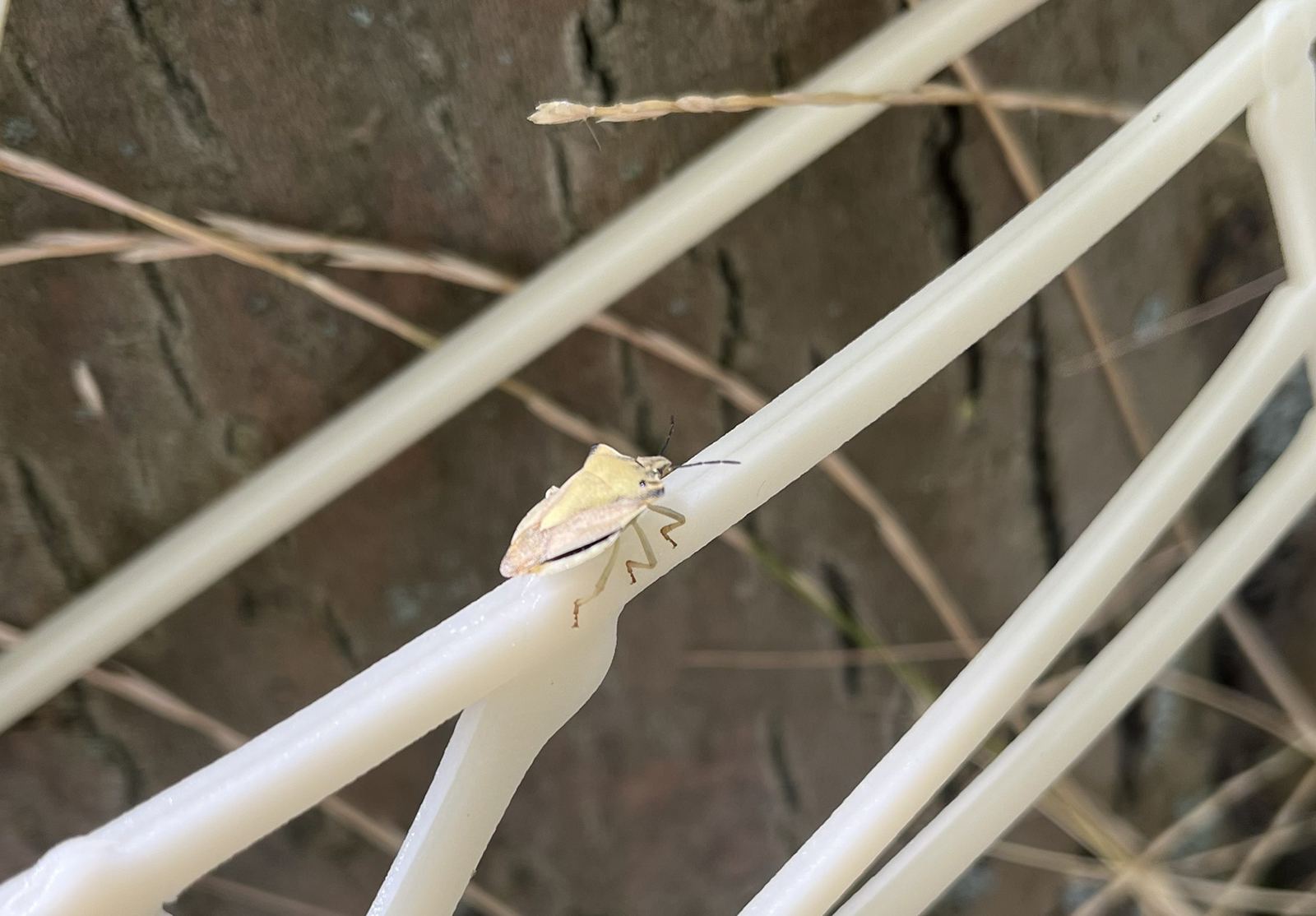
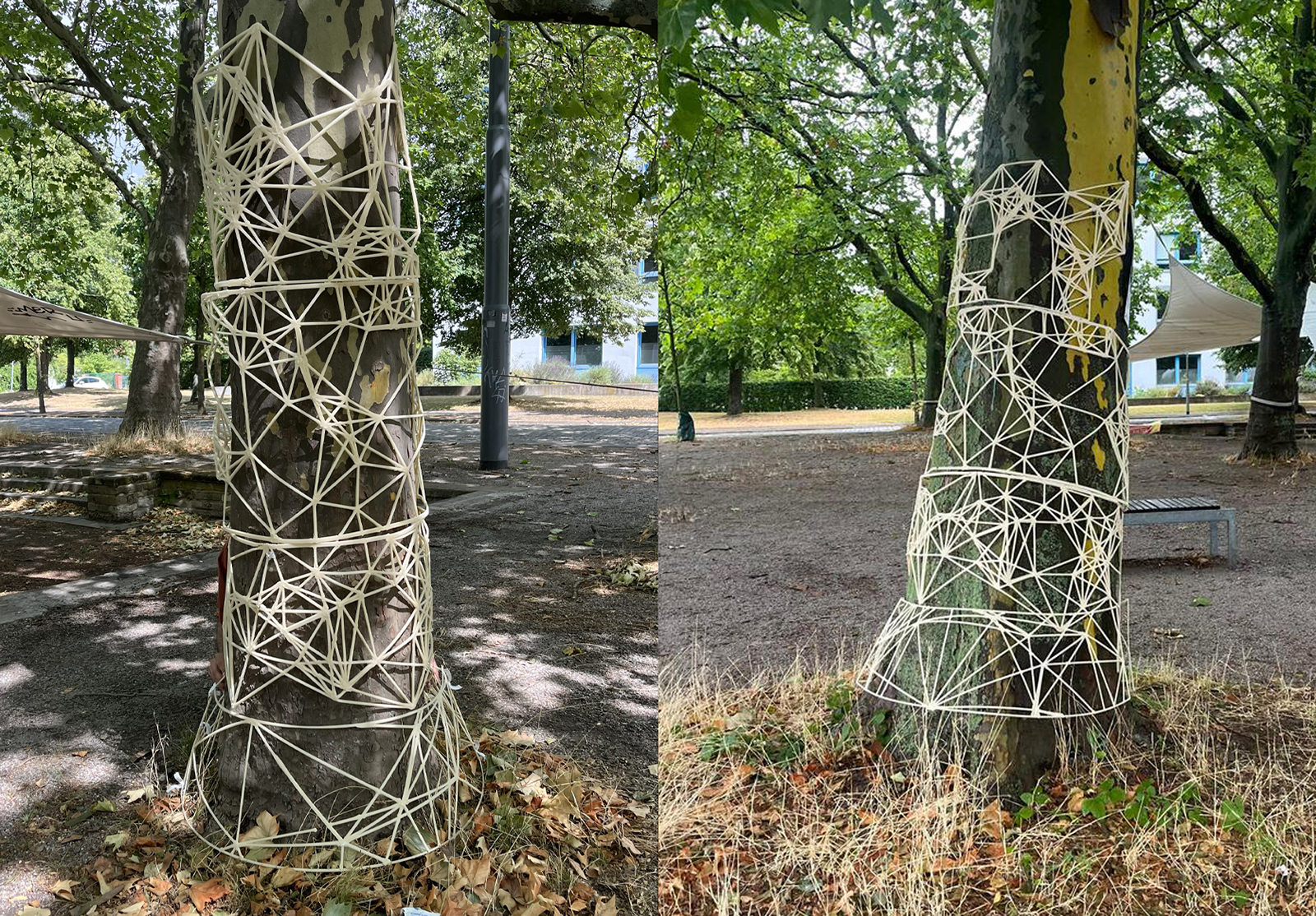
Biomorphic Shell is a speculative design project inspired by mycorrhizal fungi, whose cooperative networks sustain trees underground. Translating this logic above ground, the project proposes a modular 3D-printed lattice that wraps around a tree to offer protection, support, and small habitats for other species. Based on 3D scanning and growth algorithms, the structure adapts to the tree’s form and encourages multispecies coexistence. While still conceptual, the project shifts design toward ecological collaboration and highlights how supportive relationships between built structures and living systems might be cultivated in the future.